
Yam Berries!
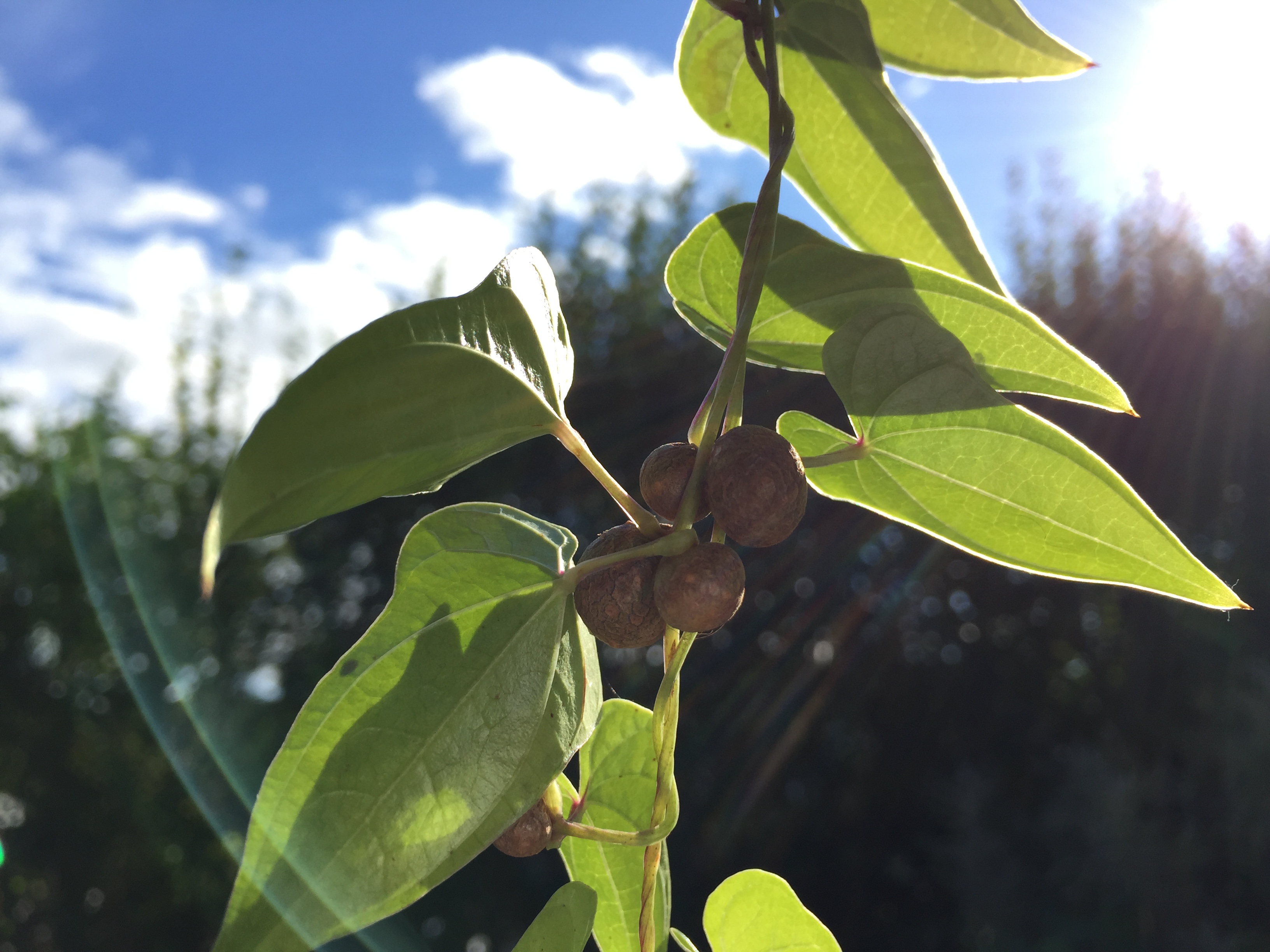 Have you ever heard of Chinese yam? I hadn’t either until I saw it on the Food Forest Farm website.
It’s essentially a perennial potato, but it gives you two kinds of potatoes: one huge potato that grows underground to be harvested every few years, plus an annual crop of "yamberries" that grow on the vines in late summer.
I planted some chinese yam in April this year, and by August I had a few 5-foot vines that were covered in a few hundred yam berries.
These yam berries are tiny (a half-inch or so), but there are tons of them, and they are delicious! Just fry them up in butter and they’re basically like crunchy little french fries or homefries.
They are also very easy: no cleaning required since they grow above ground, no peeling, and they fall right off the vine.
Did I mention that chinese yam is perennial? And from what I’ve read, it also grows and spreads like a weed. So it’s super easy to grow: plant it once, and you get free potatoes forever.
Win-win! Go get some!
3 Easy Ways to Drastically Boost Your Health Today
 Stop me if you’ve heard this one before: there’s an obesity epidemic in America. Fully two-thirds of us are overweight or obese.
But did you know that most of those people are actually malnourished? In fact, you are probably malnourished.
And ironically, malnourishment contributes to obesity. The standard American diet contains plenty of calories, but not enough nutrients. So your body thinks it’s starving (because nutritionally it is), and it ramps up your hunger hormones, to make you eat more.
To fix this, you need to eat more nutrients, without increasing your caloric intake. How is that possible? By eating foods that are more nutrient-dense.
The hard way is to eat liver once a week. It’s hard because liver is not delicious, to put it mildly. But liver is the most nutritious food on the planet by far. It’s not even close. So if you’re serious about nutrition, eat it.
But there’s an easy way too, because there are three super-nutritious foods that are also super-tasty:
1. Mixed nuts. That’s right, plain old nuts have more nutrients in greater quantities than most foods. A few handfuls of almonds, pistachios, pecans, and sunflower seeds per day is a no-brainer. Do it!
2. Oysters. Now, if raw oysters gross you out, try these amazing smoked oysters in olive oil. The taste and texture is totally different, and much better, than raw oysters. Nutritionally, oysters are a close #2 or #3 after liver. And they’re one of the very few sources of the omega-3 fats EPA and DHA, which are essential for health. Twice a week would do you wonders.
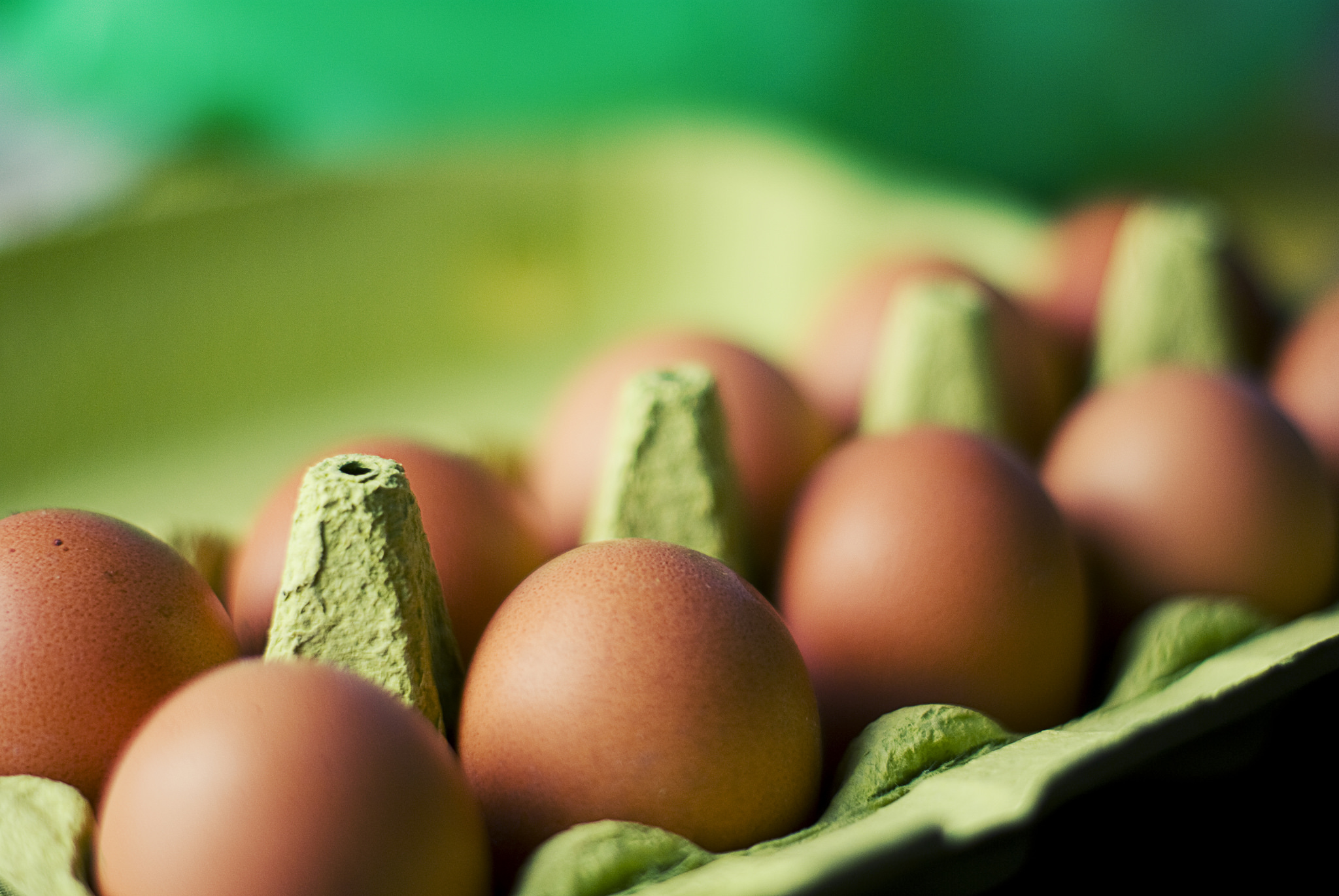
3. Whole eggs. Egg white is a good source of protein, and egg yolk is packed with vitamins and minerals, including some that are crucial for health that aren’t found in many other foods: choline, biotin, and vitamin K2. Two to four eggs per day is a good goal. And no, the cholesterol in egg yolks is not a problem, because in most people, dietary cholesterol has little effect on blood cholesterol levels.
The best method for incorporating these foods into your diet is to replace less-nutritious foods with them -- you want to replace calories, not add more. A good place to start would be to remove any processed or packaged foods. Or if you’ve already done that, then remove bread, pasta, and cereal. Replace those calories with nuts, oysters, and eggs, and you’ll be significantly improving your nutrient intake, and your health too.
My Solar-Powered iPhone
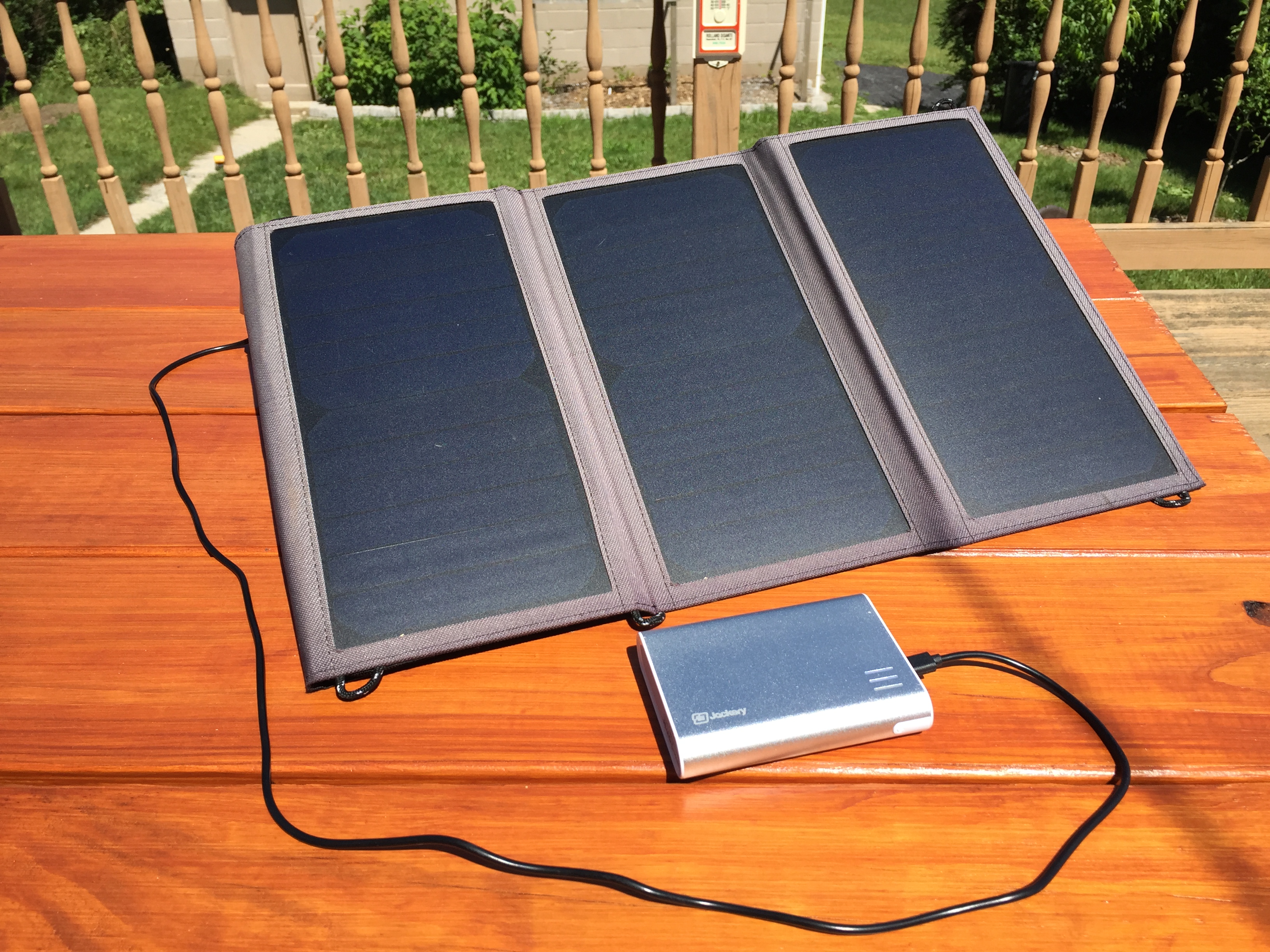 For most of this year, my iPhone has been 100% solar-powered. Same for my FitBit, my bluetooth headset, and my rechargeable batteries.
You might think this would be difficult or expensive, and 10 years ago it probably would have been. But today it’s cheap and easy.
I bought a Nekteck 20W Solar Panel for $49. This thing couldn’t be simpler. It folds pretty small for storage, or to carry in a backpack, etc. To use it, you just unfold it (it’s about one foot by two feet) and plug your USB devices into it -- it has two USB ports for charging.
The solar panel charges my iPhone 6 in about an hour on a sunny day. It also works on cloudy days, which kinda surprised me: it takes much longer, but still charges. It takes about 4-5 hours to fully charge my iPhone when it’s cloudy.
I also got a Jackery Giant battery pack for $25. This device is roughly the size of a smartphone, but 2-3x thicker. And it has USB ports to charge any USB device. It has a capacity of 12,000 mAh, compared to about 1800 mAh in the iPhone 6 itself.
The Giant lets me charge up during the day, then charge my iPhone from it overnight. And since it can charge my iPhone six or more times, it gives me some buffer for cloudy days.
Fully charging the Giant takes about 2 or 3 days, but it doesn’t need to be fully charged in order to use it.
Later, I also got this XTAR battery charger for $29, to charge my AA, AAA, and C/D batteries from the solar panel.
With this setup, I’ve been able to power all of my portable devices with 100% solar power for nearly a year now. That’s a pretty awesome feeling.
It’s nice to know that in the event of a power outage or other emergency, I have an alternative source of electricity.
And it’s also just kinda geeky-cool to be able to charge your devices without plugging them into the wall.
Delicious, Kid-Friendly, Super-Easy Salmon Recipe
 When Gavin first started eating solid foods, he would eat salmon, but a few months ago he lost all interest in it. He still loves oysters and mackerel, but not salmon.
That’s a bummer, because salmon is one of the most nutritious foods available; there are only a few things more nutrient-dense, including oysters, sardines, liver, and a few types of nuts and seeds.
Well I just found a way to make him love salmon again: add a little maple syrup. It’s not enough to make it taste sweet, but it somehow cancels out much of the fishy flavor. In any case, the result is delicious, for both kid and adult.
Ingredients:
20g real maple syrup (no HFCS-based garbage)
30g butter (~2 Tbsp)
100g wild salmon
Directions:
In a small stainless-steel pan, simmer the butter on medium-low heat, then add the salmon, and cook for about 5 minutes until it starts to simmer. Then add the maple syrup and cook another 5 minutes.
That’s it. Super quick and easy, and tastes great. The truth is, the salmon that I use (SeaBear Ready-To-Eat Smoked Sockeye Salmon) is already so good that I often eat it right from the pouch at room temperature. But since Gavin isn’t into that anymore, I’m glad to have an alternative recipe.
The $5 Tool That Will Save You Hundreds of Dollars
 You think you know about batteries, right? Actually you probably barely think about batteries at all, because they’re such a mundane item in our daily lives. What’s there to think about?
Well I recently learned something about batteries that was downright stunning. Shocking, even.
When a battery-powered device stops working, you take out the dead batteries, chuck ’em, and install fresh ones, right?
What if I told you that half of those "dead" batteries that you’ve been chucking for your whole life are not dead at all? That they are, in fact, almost brand-new and full?
It’s true. Since I bought this little $5 gadget last month, I’ve been testing the "dead" batteries that I pull out of dead toys, lights, etc. And most of the time, half of the batteries in the device are dead as a doornail, while the other half are still almost fully charged!
This seems so unbelievable. There’s no way I would believe this if I hadn’t witnessed it myself repeatedly. Well, you’ll just have to try it and see.
How to Be Prepared Without Being a Crazy Prepper
I recently watched the show American Blackout, and I thought it did a decent job of showing how people in different situations might survive -- or not survive -- a short-term disaster in America. (Ebola outbreak, perhaps?) But while it’s currently profitable for the media to showcase the craziest people in the prepper movement, what’s lost in the hype is the fact that it is, in fact, smart to be prepared for disaster, at least to some extent. Some people go overboard with it, but it’s equally foolish to be so reliant on the supermarket and the grid and the government that you couldn’t survive a few weeks cut off from those kinds of external systems.
Fortunately, such short-term survival is pretty easy to prepare for. In fact the best way to prepare is to make it part of your regular routine, so that it takes no extra effort when disaster strikes.
Consider water. Bottled water is the best bet, since in a power outage, your tap water might not be clean or might not run at all. The easiest approach is to buy cases of half-liter bottles, and always keep a months’ worth on hand. So if you typically consume 3 cases per month, then buy 6 cases to start, and never let your stock get below 3 cases. You can even have cases delivered to your house monthly to make it super easy. Or if you prefer tap water, then just use gallon-sized plastic jugs instead, and refill them. Either way, the key is to use and rotate the water supply as part of your normal routine, so it’s always stocked and always fresh. Keep some in your fridge for normal use, so you’re not losing any convenience (i.e. cold drinks) during normal times, yet you’re still prepared for an emergency.
Water is also necessary for flushing the toilet, so keep a few extra gallons -- or a few tens of gallons -- on hand for that.
Next up is food. For short-term emergencies lasting a week or less, which is the vast majority of them, food is actually not that important. The average non-overweight person has enough body fat to survive a couple weeks without food, as long as water is available. And the average American actually is overweight, so has even more body fat and could survive even longer. A week or two without food wouldn’t be enjoyable, but it wouldn’t kill you either. That said, the average American house contains at least several days’ worth of non-refrigerated packaged food anyway, so again, for short-term survival this is a non-issue.
To do survival food right, though, especially for longer-term survival, it does take a small amount of planning, namely: finding high-quality food with a long shelf life that you enjoy eating. There’s plenty of processed junk food that lasts forever, but there’s actually a lot of good stuff, too: oysters, beef jerky, nut mixes, herring, sardines, fruit and seed mixes, salmon... It’s important to get high-quality food because, as with the water, you’ll be eating these things regularly -- say once or twice a week -- during non-emergencies, in order to move through your stock and keep it all fresh. That’s less important for the meats, because all those items I just linked to will last a year or more, but the fruit and nuts are typically good for a couple months.
There are many other aspects to disaster prep: protection/self-defense; knowing your neighbors, since you’ll rely on each other more when cut off from the nanny state; growing your own food as much as possible, or at least, knowing your local farmer; having an off-grid and renewable way to heat your house, such as a wood stove. Always keep a little cash in your wallet, even though you may not use cash very often in normal circumstances. Keep your car’s gas tank at least half full. Keep a bug-out bag ready, which is easy if you go for hikes regularly: just make it your hiking bag, which already has a flashlight, multitool, and first-aid kit, so just add a couple bottles of water and a few food items.
Most of these recommendations are simple and cheap; it’s more Boy Scouts ("Be Prepared") than "Doomsday Preppers". The extreme conveniences of modern life have lulled us into a state of complacency, where we rarely need to plan or prepare at all, since anything we might need is always just a short drive to the nearest Wal-Mart, at any time of day or night. Smart emergency preparedness is about working towards regaining some of the self-sufficiency that used to be commonplace and a point of pride in America. You don’t need a bunker stocked with k-rations; but when you stop taking for granted all those modern conveniences, you realize that a bit of planning and preparing just makes sense.
So, how many days could you survive cut off from the outside world?
The Perfect Egg Flipper: Lodge 8-Inch Cast-Iron Pan
I’ve been trying to switch from Teflon pans to cast-iron pans, partly due to the questionable health and safety status of Teflon, but also because I’m sick of having to buy new Teflon pans every 6-12 months when their non-stick coating starts to fail.
This transition has been pretty easy, and cast-iron pans are dirt cheap. But the one thing I worried about was eggs: would I be able to fry two eggs in a cast-iron pan and flip them properly? Of course properly means flipping them in the air, without a spatula. That’s how I’ve cooked eggs my entire life, and having to use a spatula instead would be a sad combination of absurd and depressing.
Flipping eggs in the air is trivial in a (new) Teflon pan, but what about cast-iron? I did a web search and found plenty of people saying that cast-iron is every bit as non-stick -- if not moreso -- as Teflon, once it’s properly seasoned. I was encouraged, but skeptical.
I bought the 8-Inch Lodge L5SK3 Pre-Seasoned Cast-Iron Skillet. The Lodge logo is a pan with an egg in it, so it must work, right? But the instructions clearly state that the pan’s pre-seasoned coating is not perfectly non-stick, but will get better with time. I was anxious to try it anyway, so I fried up some eggs, and they stuck. Severely.
I then spent three months using the pan for things other than eggs: mainly fried vegetables and ham. The key is to just rinse the pan with hot water to clean it; never use soap, and if it needs scrubbing, just use a stiff-bristled brush. Then, don’t towel-dry it; just put it on the stove briefly until all the water evaporates. At that point, if the cooking surface looks shiny, you’re done: just put the pan away. But if it looks dull and dry, which it did the first few times, then put in a tiny bit of coconut oil and spread it around, coating the entire cooking surface. Turn it over to drip out any excess, then put the pan away until next time.
Using that cleaning method, and cooking with the pan only about 4 times per week, it gained a really nice non-stick surface in about three months. And that included a couple of rookie mistakes where I used the cast-iron pan to cook acidic sauces (marinara once, and BBQ another time) -- those eat away the non-stick surface pretty badly, and your food tastes like iron. But fortunately, it only takes one or two proper uses to fix the surface after that.
Last week I decided to give eggs another try, and lo! They cooked beautifully. They did stick just a little bit at first, but I was able to break them free just by shaking the pan. Then with a flick of the wrist, they flipped over easily.
So here’s my perfect fried eggs recipe in a non-stick cast-iron pan:
1. Set stove to medium and pre-heat pan for 7 minutes. (That’s an electric stove; I’d guess gas needs less time and/or lower heat.)
2. Add 1 tablespoon of butter and let it cook for 1 minute.
3. Add two eggs. They should sizzle pretty good immediately. Salt and pepper.
4. Don’t touch the pan for 2 minutes. At 2 minutes, gently shake the pan until the eggs slide around freely, then flip them (in the air, not with a spatula, you sissy!).
5. Turn off the heat and let the eggs cook for 1 more minute (3 minutes total). Add more salt and pepper to this side, plus some shredded cheddar cheese.
6. Slide the perfect eggs right onto your plate. The whites should be slightly browned and the yolks warm but runny.
Nuts of Deception: Planters Mixed Nuts
I love Planters. From Honey Roasted Peanuts to Dry Roasted Sunflower Kernels to Mixed Nuts, they make some tasty snacks.
But a man can only turn a blind eye to injustice for so long. Shown below are the entire contents of a 248g pack of Planters Deluxe Mixed Nuts: Cashews, Almonds, Brazil Nuts, Pecans, and Pistachios:
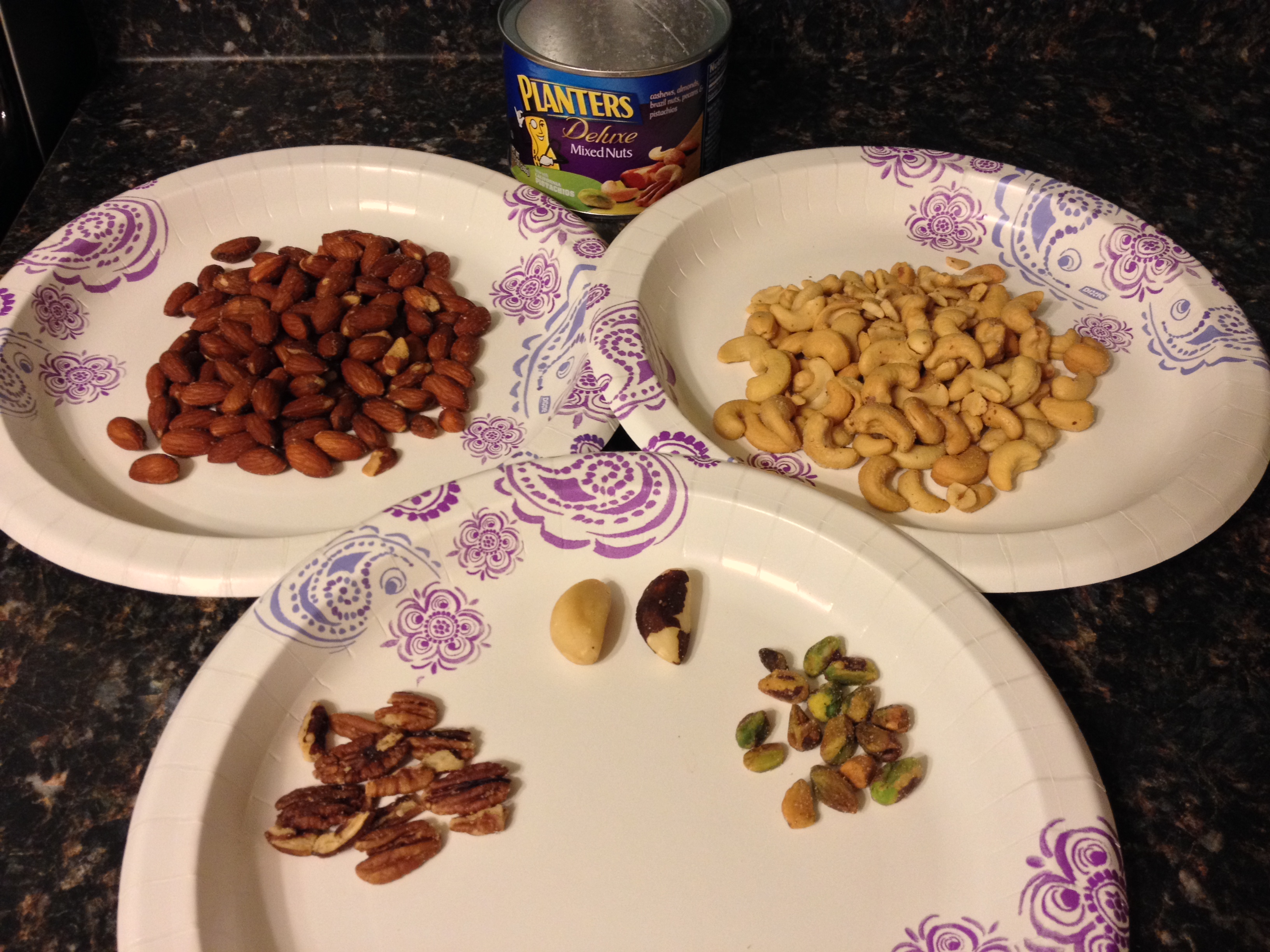
What’s wrong with this picture?
This is not an anomaly. I eat these regularly and it’s always the same. This time I decided to separate the nuts to see if the disparity was really as bad as it seemed to be. The results:
Cashews: 113g
Almonds: 113g
Brazil nuts: 8g (2 nuts)
Pecans: 8g (~6 nuts)
Pistachios: 8g (~16 nuts)
I know some nuts are more expensive than others so I don’t expect the ratios to be exactly one to one... but TEN to one? That’s just pathetic. Planters, you oughta be ashamed of yourselves.
Home – Create Post – Archives – Login – CMS by Encodable